Suzhou Ansion Technology

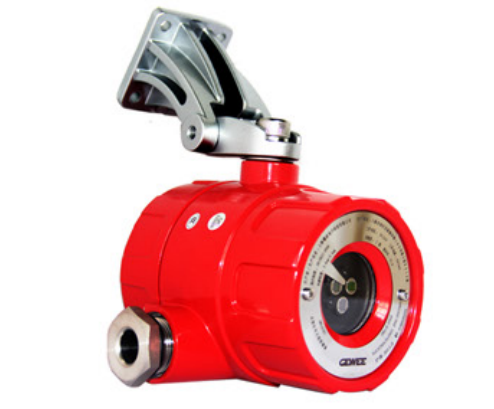
How Flame Detectors Work

Flame detectors are used to detect invisible light radiation that is visible or absent in the atmosphere while producing smoke and releasing heat when a substance is burning.
For the ultraviolet rays with a wavelength of 0.185~0.260 microns generated in flame combustion, a solid substance can be used as a sensitive element, such as silicon carbide or aluminum nitrate, and an inflatable tube can also be used as a sensitive element, such as a Geiger-Miller tube. For the infrared rays with a wavelength of 2.5-3 microns generated in the flame, sensors made of aluminum sulfide can be used, and for the infrared rays with a wavelength of 4.4-4.6 microns generated by the flame, sensors made of lead selenide or aluminum tantalate can be used. Different sensors can be selected according to the spectrum emitted by different fuel combustion, and triple infrared (IR3) is widely used.
Applications
Can be used in civil, construction and industrial fields.
●Exploration, production, storage and unloading of oil and gas
●Offshore drilling — fixed platform, floating production storage, loading and unloading
●Land drilling — refineries, natural gas reloading stations, pipelines
●Petrochemicals—production, storage and transportation facilities, oil depots, chemicals
●Combustible material storage warehouse, automobile—manufacturing, paint spray room
●Aircraft—industrial and military, explosives and munitions
●Automobile—painting room
●Pharmaceutical industry
●Production, storage and transportation of high-risk industrial dyes such as powder rooms.
Installation points
- The general principle is to install the detector at twice the height of the highest target in the protected area. Within the effective range of the detector, it cannot be blocked by obstacles, including transparent materials such as glass and other spacers. At the same time, it can cover all targets and areas that need to be protected, and it is convenient for regular maintenance.
- When the detector is installed, it is generally inclined downward at an angle of 30-45°, which can not only look down but also look forward, and at the same time reduce the possibility of contamination of the mirror surface. All possible fires in the protected area should be kept in a straight line incidence to avoid indirect incidence and reflection.
- In order to avoid detection blind spots, another flame detector is generally installed in the opposite corner, and it can also provide a backup when one of the flame detectors fails.
The above points are generally paid attention to when the flame detector is installed. Here is a friendly reminder that special attention should be paid to avoid possible false alarm sources within the conical detection range of the flame detector.