Suzhou Ansion Technology


What toxic and harmful gases are there in sewage plants?

A sewage treatment plant is a facility used to treat sewage in order to remove or reduce the pollutants in the wastewater to a level where it can be safely discharged into the environment or recycled. Sewage treatment plants usually consist of a series of physical, chemical and biological treatment processes to ensure that wastewater meets legal discharge standards or reuse requirements.
In the inlet channel (pipeline) of a sewage treatment plant, a large amount of toxic and harmful gases can be generated or present. During the treatment stages of sewage and sludge, putrefying sewage, sludge, and the treatment process can mainly produce toxic gases such as ammonia, hydrogen sulfide, and hydrogen chloride. In the normal operating state of the sewage treatment plant, the staff mainly perform inspection tasks. However, there may be a risk of poisoning when workers enter process sections such as bar screens, grit chambers, and secondary sedimentation tanks. Additionally, during equipment maintenance and the process of desludging treatment pools, equipment, pipelines, etc., there is a risk of asphyxiation and hydrogen sulfide poisoning due to limited space or confinement. Accumulation of methane and hydrogen gas can occur in poorly ventilated spaces where sewage and sludge are stored, and in the presence of an ignition source, this can lead to fire and explosion.

A sewage treatment plant may produce some toxic and harmful gases. Here are some common toxic and harmful gases:
Hydrogen sulfide (H2S): It is a toxic gas with a pungent odor that can be produced by the decomposition of sulfides in wastewater. High concentrations of hydrogen sulfide are harmful to the respiratory and nervous systems and can even cause asphyxiation.
Ammonia (NH3): Ammonia is an irritating gas that can be released from ammonia compounds in wastewater. High concentrations of ammonia are harmful to the eyes, respiratory system, and skin.
Methane (CH4): Methane is a flammable gas that is often produced by the decomposition of organic matter in wastewater. High concentrations of methane can form explosive mixtures in the air, posing a risk of fire and explosion.
Hydrogen gas (H2): Hydrogen gas is a highly flammable gas that can be generated by electrolysis or anaerobic digestion processes in wastewater. High concentrations of hydrogen gas carry the risk of fire and explosion.
Carbon monoxide (CO): Carbon monoxide is a colorless, odorless, and toxic gas that can be produced by incomplete combustion or anaerobic digestion processes in wastewater. High concentrations of carbon monoxide can cause poisoning and even death.
Nitrogen oxides (NOx): Nitrogen oxides are formed from nitrogen compounds in wastewater during the treatment process. High concentrations of nitrogen oxides can irritate the respiratory system and react with other pollutants in the atmosphere to form acid rain.
The generation and emission of these gases need to be controlled and monitored in the design and operation of sewage treatment plants to ensure the safety of workers and the environment.
Solution:
Monitoring Locations: Water tanks, concentration tanks, underground sewage, sludge gate wells, stagnant sewage pools, disinfection facilities, bar screen spaces, and grit chambers.
Monitoring Factors: Toxic gases (hydrogen cyanide HCN, carbon monoxide CO, carbon dioxide CO2, chlorine gas CL2, ozone O3, chlorine dioxide CLO2), flammable and explosive gases (methane CH4, hydrogen H2).
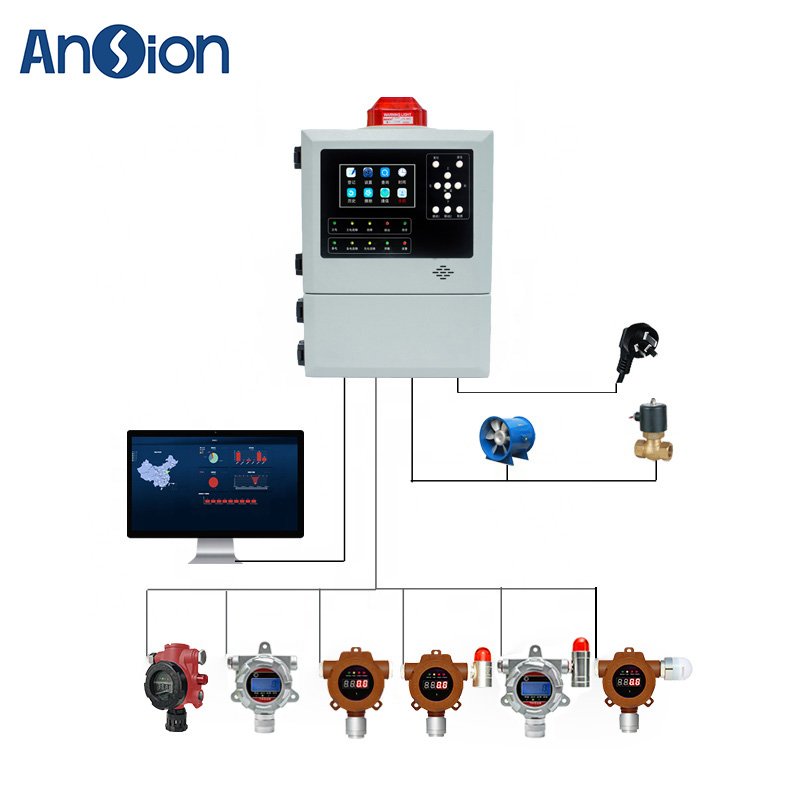
Data Transmission: Wired transmission or wireless transmission.
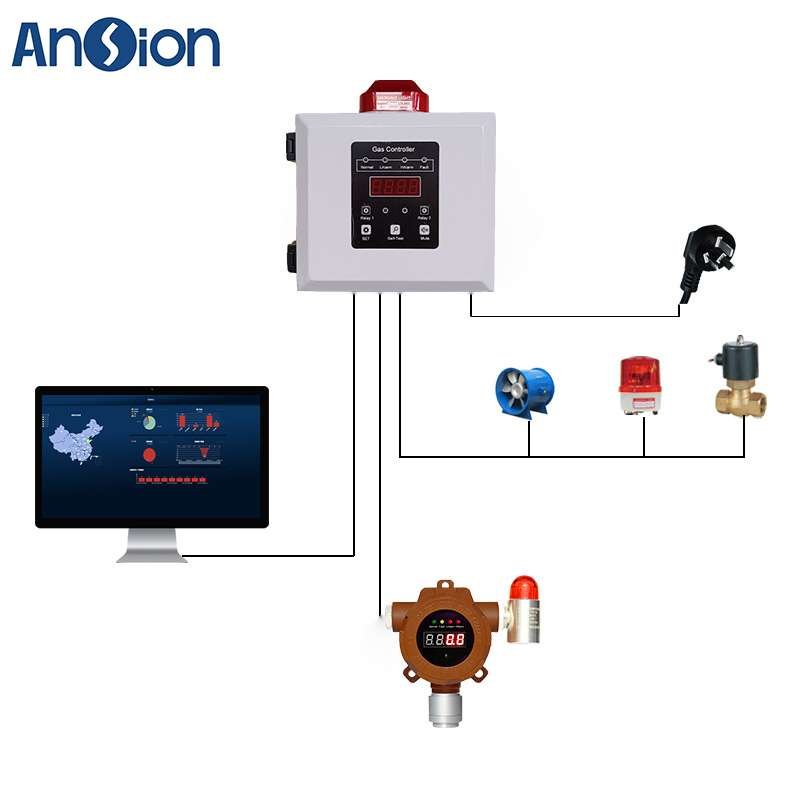
- Wired transmission: Gas detection instruments transmit data to gas alarm controllers in the form of 4-20mA current signals or RS485 digital signals, which are then converted and transmitted to computer terminals.
- Wireless transmission: Gas detection instruments transmit data to gas alarm controllers using 4G wireless modules or LoRa wireless modules. The data is further transmitted wirelessly to computer terminals via the internet network.
Solution Components:
Front-end Medium Monitoring: Gas detection instruments, shielded cables, fiber optics, wireless modules, switches, gas alarm controllers, PLC, DCS, etc.
Terminal Monitoring and Management: Client-based online gas monitoring software platform, monitoring center platform system, etc.