Suzhou Ansion Technology

How to Properly Install Gas Detectors in Locations Without Supporting Structures?

—— Standardized Installation Method for Fixed Gas Detectors in Open Spaces
✅ 1. Recommended Installation Methods
1. Mounting on a Stand or Pole
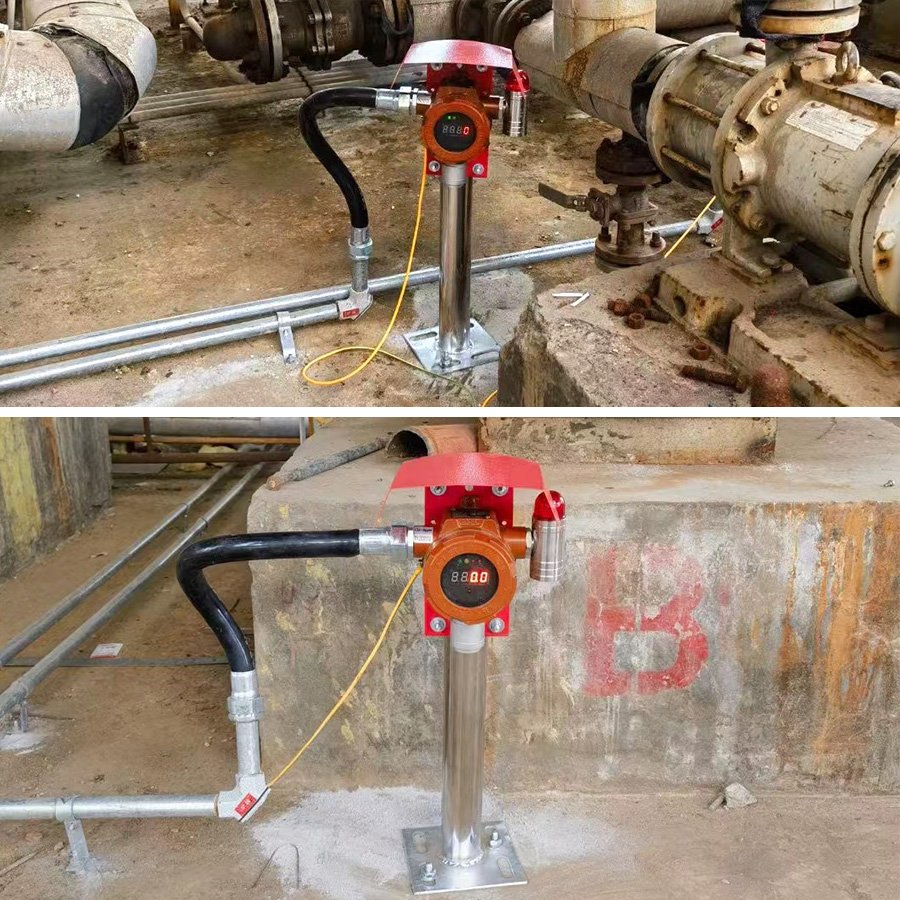
- Freestanding Pole: Use stainless steel or galvanized steel poles as a support structure to securely mount the detector.
- Base Fixing Options:
- Use embedded anchors with concrete to ensure stability;
- If ground modification is not allowed, use a heavy-duty weighted base as a temporary alternative.
- Installation Height:
- Chlorine is heavier than air, so the detector should be mounted 0.3–0.6 meters (1–2 feet) above the ground, near potential leakage points.
2. Power Supply and Wiring
- Use corrosion-resistant and explosion-proof cable conduits or trays;
- Install a junction box on the pole, preferably on the side or back to protect it from weather and mechanical damage;
- Ensure cables are properly fixed to prevent sagging, disconnection, or tripping hazards.
✅ 2. Key Installation Considerations
1. Detector Placement
- Position the detector close to potential gas leak sources;
- Avoid placing near direct wind, rain exposure, or direct sunlight;
- Ensure the detector is in a well-ventilated area without obstructions that could block gas diffusion.
2. Space for Maintenance
- Leave enough clearance for inspection and maintenance;
- The front of the detector should be unobstructed for easy visibility of indicators and safe manual testing.
3. Environmental Resistance
- For harsh or corrosive environments (e.g., chemical plants, water treatment facilities, disinfection rooms), ensure the detector meets:
- Corrosion-resistant housing (such as 316 stainless steel);
- Explosion-proof certification (e.g., Ex d or Ex ia);
- IP65 or higher protection rating against dust and water.
✅ 3. Optional Accessories and Recommendations
| Accessory | Purpose |
|---|---|
| Rain Shield | Protects the detector from direct rainwater |
| Heavy Base Plate | Provides stability, especially on soft or uneven ground |
| Warning Signage | Marks the area with “Chlorine Detector” or “Toxic Gas Area” to alert personnel |
| System Integration | Link to ventilation systems, alarms, or emergency shut-off valves for automatic response |
✅On-site Installation Diagram (with Dedicated Mounting Bracket and Rain Shield)